3.16.2011

We Have Met the Enemy

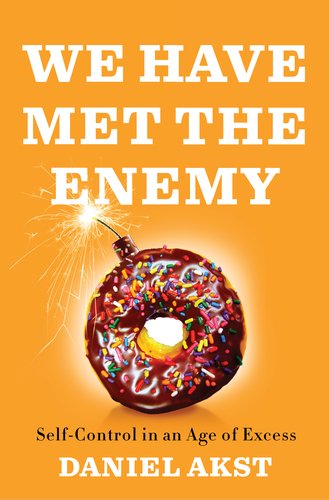
Just wanted to quickly share an interesting book I picked up at random while in the library recently (okay maybe not so randomly - the cover image of a donut kind of reeled me in a bit). Daniel Akst's We Have Met The Enemy: Self-Control in an Age of Excess had the potential to be highly informative or extremely bleak. Fortunately, it proved to be the former end of the spectrum.


Akst provides a thorough account of the existing knowledge concerning self-control, from university studies on delayed gratification to centuries-old literary texts evidencing precommitment self-control devices. He introduces us to nearly all sides of the issue through a variety of methodological lenses: psychological, sociological, philosophical, biological, etc. Though he never provides an unequivocal answer to the question of free will, Akst provides readers with plenty of arguments on both sides of the issue in this humorous, entertaining, and highly readable volume. All throughout We Have Met the Enemy readers are posed questions that call for consideration regarding their own sense of control, restraint, indulgence, and the like. 

There were plenty of great discussion points raised throughout the book, but I appreciated what Akst had to say regarding the changing times, in particular the increased demands on our mental ability to exercise self-control. More and more Americans are plagued by obesity, laziness, addiction, exorbitant spending, and the like in this day and age. While we are continually finding new ways to understand such personal problems, whether conceptualizing them as diseases or finding social ills to blame, Akst's premise is essentially that we are lost in a sea of choices among which we are ill-equipped to decide upon. Modern culture is truly an age of excess, requiring more self-control than any other period in history. Society has gone full-steam-ahead while our human capacities for moderating all of these stimuli are evolving at the same old pace. As Akst explains "Modern life simply requires an unnatural degree of self-control, and one of its side effects is self-control fatigue." 

This book won't provide you with fool-proof solutions for resisting a second helping of dessert or keeping your hands out of your savings account, but rather it will offer you hints as to how to do so through the evidence garnered from innumerable studies in self-control. Ultimately the two best methods to employ for optimal self-control are altering one's environment and forming good habits. Akst repeated returns to the importance of outside factors in determining or affecting behavior. Though many of these things may seem outside of our control, there are, in fact, plenty of ways we can prime ourselves for making (and sticking to) the kinds of decisions we want to make. Whether it be as simple as getting a little exercise, changing the lighting in your office, or leaving your credit cards tucked away at home, there are plenty of things we can do to manipulate our environments, and thus, our ability to demonstrate self restraint. 

Furthermore, if we can cultivate positive habits to replace those that run contrary to our self-control goals, we can make our work of self-control much easier. Making it a habit to go for a 30 minute walk every morning is positively-reinforcing - each morning's walk will improve mood and health, while further improving the odds of a walk the next morning - while also a great way to replace negative habits, like sleeping in or not exercising. Changing patterns of behavior until they become so habitual as to be like second nature is another sure-fire method of managing behavioral preferences without having to put up a fight with oneself. 

Based upon academic knowledge and anecdotal evidence, We Have Met the Enemy will get you thinking about the various factors that keep you from doing what you know is best but Akst sprinkles quips and quirks throughout to keep readers interested, engaged, and entertained.

3.15.2011

Pea and Parmesan Barley Risotto


Sometimes when I don't have all the right ingredients on hand, I make substitutions that ruin a dish. But sometimes, if I'm lucky, I create a surprisingly delicious new concoction that becomes a classic in my kitchen.

Fortunately this risotto is a case of the latter for me. I'd been meaning to make it for months and finally got around to it just a few days ago, only to discover I was all out of white wine and yellow onion. I worried that a red onion would add too much sweetness and a half cup of red wine would create too distinct a flavor. I was delighted to find that they combined to create a magical risotto combination.

Risotto is one of those seemingly daunting culinary quests that actually only requires a bit of time and an arm workout. This barley risotto is a bit of a twist on the classic risotto made from rice. I stuck to the staple ingredients of the most basic risottos out there, so it's got a wonderful time-tested flavor profile that is sure to please. It's a great comfort food and really versatile - once you get the basics of risotto down (stir, stir, stir!), you can make all sorts of herbal, cheese, wine, and vegetable variations.

The recipe below is the recipe I created and intended to use. My particular version as photographed used a red onion in place of a yellow one and red wine instead of white. If you don't have all the listed ingredients on hand or you'd like to follow my variations, feel free to experiment! Enjoy!


Pea and Parmesan Barley Risotto


Ingredients
  • 3 cups cooking stock (chicken or vegetable)
  • 2 Tbsp olive oil
  • 1 medium yellow onion, diced
  • 2 cloves garlic, minced
  • 1 cup pearl barley
  • 1/2 cup dry white wine
  • 3/4 cup peas
  • 1/2 cup freshly grated Parmesan cheese
  • 2 Tbsp butter
  • Salt and pepper
Directions
  1. Heat cooking stock over medium to medium-low heat.
  2. In large sauce pan, heat olive oil over medium heat. Add onion and garlic until soft and fragrant.
  3. Add all the barley to sauce pan and toast 2 minutes.
  4. Add 1/2 cup of stock and stir constantly. Once liquid is mostly evaporated (barley will begin to get sticky), add another 1/2 cup.
  5. Continue this process of constantly stirring and adding 1/2 cup stock once the previous addition has been absorbed and/or evaporated.
  6. Once half of the stock has been used (about 3 half-cup additions), add the wine, continuing to stir constantly. As soon as the wine has been evaporated, continue stock-adding process.
  7. Add peas with the last 1/2 cup of stock.
  8. Turn off heat and add cheese, butter, salt and pepper. Give a good stir and then serve. Sprinkle with extra Parmesan if desired. Enjoy!

3.14.2011

Monkey Bread, Books, Bloggers, and More: The Week in Review

What to do when you've got a hankering for monkey bread but no appropriately-sized oven-safe dishes? Reach for the Pyrex. I had a small case of Pillsbury Grand Buttermilk Biscuits and no small dishes for my monkey bread - so I poured it all into my handy Pyrex measuring cup for some safe and delicious baking. I'm pretty proud of my resourcefulness!


 Finally I made it back into the kitchen to cook a few well-rounded meals. Barley risotto anyone?


Or how about some homemade guacamole, courtesy of Trader Joe's Guac Kit? I try to eat seasonally and locally as much as possible but broke my own rules a little bit with this one. It's nice to indulge and pretend it's summer every once in a while.


I also had all the makings for some uber-delicious artichoke pasta complete with authentic Italian penne rigate!


I like to finish all of my healthy meals off with some Oreos & peanut butter for dessert. And yes, those are red-creme-filled Oreos for Christmas, not Valentine's Day. One of the few times when I'm grateful for the highly processed nature of so many foods these days: an extra-long Oreo shelf life!


I've been raiding the local library lately (though this doesn't really mark any significant change in my regular bibliophile behavior). Nonfiction dominates my reading list these days and I'm particularly excited about each and every one of these books! I'm currently working my way through Omnivore's Dilemma - look out for plenty of reviews in the coming weeks!


On top of doing a bit more cooking than usual, I also had enough free time this week to do some long-awaited blog seeking. Here are some of my latest finds:

First is a relatively new blog called 182 Days that is one of the most honest, inspiring, heartbreaking blogs around. This blogger was diagnosed with ovarian cancer and given only 182 days to live. Her blog is a testament to her strength and will to live in the face of such earth-shattering news. She takes us along for the journey as she does the things she's always wanted to do and lives these precious days to their fullest. I find her completely inspiring and refreshingly honest and am so glad to have come across a blog such as hers. 

Then there's Heart Zeena from London-based textile designer Zeena. She posts about all sorts of goings-on in the world of ethical fashion which I absolutely love and she's a really talented woman to boot!

The Vivification of Mrs. Moment is one of my other most treasured blog finds as of late. Blogger Kat is all about random acts of kindness, humanitarianism, activism, and life lessons learned and shared. I've been on the hunt for a blog with this kind of content for sometime now and am so glad to have found it in the talented, thoughtful, and powerful Kat!

3.12.2011

Red Velvet Donuts

So I've had this idea to make Red Velvet Doughnuts for some time now. I love doughnuts, I love red velvet cake - what more could I ask for then two of my favorite sweets in one? 


I searched for recipes for doughnuts, red velvet cake, and red velvet cake doughnuts and came up with the following adaptation of sorts. The results weren't super sweet and, since I don't have a doughnut pan, I made them into doughnut holes rather than in the traditional doughnut shape, so they don't look quite like doughnuts either. 


I tried using muffin tins, a baking sheet, and even frying them. The muffin tins yielded the best looking doughnut holes, the baking sheet batch tasted greatest, and the fried ones were delicious but not very well-crafted (I was a bit impatient with the frying process and didn't take the time to carefully shape them into small, round doughnuts - they were too large to cook all the way through but over-fried on the outsides). 


Even though it may sound like this wasn't an extremely successful endeavor, I think with a real doughnut tin, these would be absolutely great. I also didn't ice them at all, unlike your average store-bought cake doughnut, which would make them more conventionally sweet. (Side note: I was watching some behind-the-scenes doughnut show once and learned that doughnut batter actually isn't sweet at all, but the final product always tastes so sugary because of the glazes used. The host made an unglazed-doughnut filled with hummus for a delicious savory treat to demonstrate. So maybe my batter was right on the mark!) 


So I imagine with a bit of icing, or at least a little dousing of simple syrup glaze, these would be pretty delicious. And with the right pan, they would look like the real thing. They were obviously pretty darn tasty since I finished them up before ever getting around to making a glaze and/or icing to recommend... Just don't expect them to be very close in sugar content to your Krispy Kremes and Dunkin Donuts (my personal favorite!). 


I will probably attempt these Red Velvet Doughnuts again, just with a little more forethought. The one thing that I really love about this recipe is that it sticks to traditional red velvet flavors - the buttermilk, the vinegar, the cocoa. Red velvet has this slight acidity to it on account of the buttermilk and vinegar, which lots of people don't recognize - they just assume it's chocolate cake with some red food coloring. But it is so much more and, when paired with a cream cheese or marshmallow or buttermilk frosting, there is nothing better than anything red velvet.


Red Velvet Cake Doughnuts 


Ingredients


  • 1/2 stick unsalted butter, melted and cooled
  • 1 cup sugar 
  • 1 large egg
  • 1/2 Tbsp vanilla extract
  • 2 Tbsp cocoa powder
  • 1 Tbsp red food coloring
  • 1 cup whole wheat flour
  • 1 cup bread flour
  • 1 Tbsp baking powder
  • 1/2 tsp salt
  • 1/2 cup buttermilk
  • 1 tsp baking soda
  • 1 tsp distilled white vinegar


Directions


1. Preheat oven to 350 degrees. Prepare doughnut pan or muffin tins with butter or cooking spray (I would recommend using butter for optimum sweet taste!).
2. Combine melted butter and sugar in a mixing bowl and beat until smooth and creamy. Add the egg and vanilla and beat to combine.
3. In a separate small bowl, combine cocoa powder and food coloring. Add to butter and egg mixture until fully incorporated.
4. In a separate medium bowl, mix flours, baking powder, baking powder, and salt. Whisk to combine. 
5. Add the dry ingredients and the buttermilk to the wet ingredients in alternating batches until fully incorporated.
6. In a separate bowl, combine the baking soda and vinegar. Whisk to fully dissolve, then add to the batter. 
7. Give the batter one final thorough mix to fully combine all ingredients. Pour into pans or tins until about 2/3 full, leaving room for the doughnuts to rise. 
8. Bake 16-18 minutes. For added sweetness, try a simple powdered sugar and water icing, a simple syrup glaze, or the cream cheese frosting from Paula Deen's recipe. Enjoy!


3.11.2011

2011 Sendai Earthquake: How to Help

I borrowed the following How to Help guide from my friend Sarah who borrowed it from The Daily What. Given what has occurred as a result of the earthquake and tsunami in Japan, all efforts to spread the word about how to help are absolutely necessary. 


Here's the blurb from The Daily What full of ways you can provide aid to those suffering from the recent events in Japan. Even if you can't afford to donate your time and money, post a link to The Daily What post about how to help on your facebook page, blog, twitter, or other social media venue. At the very least, please keep the victims and their loved ones in your thoughts this weekend. 

2011 Sendai Earthquake / How To Help: President Obama released a statement earlier announcing that “[t]he United States stands ready to help the Japanese people in this time of great trial.” Below is a list of charities and relief organizations you can donate to in order to help bring aid to those affected by the worst earthquake in Japanese history.
  • The American Red Cross has set up a special designation for disaster relief efforts in Japan. To donate, click here, or text REDCROSS to 90999 to instantly donate $10.
  • International Medical Corps says it is putting together relief teams and supplies to aid Japan “and other affected countries.” Donate here.
  • Click here to donate to AmeriCares’ emergency relief response.

3.10.2011

Eating Animals

Most of you probably know Jonathan Safran Foer as the author behind Everything is Illuminated and Extremely Loud and Incredibly Close. He's also husband to fellow writer Nicole Krauss, who herself is author of The History of Love and Man Walks Into a Room. All great pieces of thought-provoking, meaningful fiction. This is an undeniably talented couple.


I was intrigued when I first heard of Foer's latest literary effort entitled Eating Animals. I was curious as to the sort of style or approach Foer would take on such a topic as vegetarianism, food culture, and factory farming. Though the book was bound to be good, would it just be a repeat of the information we're fed by the Michael Pollans of the world (and don't get me wrong, I'm a huge fan of those types) or would Foer bring to light a whole new arena? Though I wouldn't say he completely unveiled a world previously unvisited in food non-fiction, Eating Animals has definitely forged a new place amongst the increasingly-popular sect of food culture literature.

Foer sets out to learn more about the meat we eat as he prepares for the birth of his first son. This book is a meditation on what food, and meat in particular, has meant to him at various points throughout his life, but also a more logical and oftentimes disturbingly realistic look at where this food comes from - and how we need to reshape some of those meanings as individuals and as an eating culture.

As my friend Sarah, who also highly recommends this book, pointed out, Foer's account of the way in which farmers raise the animals we eat is highly readable and a bit more narrative in form than the accounts of some of his counterparts. While the content itself is quite disparaging if not downright disturbing, Foer offers us a look at some of the factory farming practices that are both cruel and detrimental to our health. He creates compelling arguments as to why we should abstain from eating meat, at least the meat which is produced by the most widespread and common practices, that play on everything from empathy for animals to logic regarding our future, the environment, and our health.

This book isn't necessarily a plea to turn to vegetarianism. Though Foer is a vegetarian and poses plenty of reasonable arguments for choosing to do so, his main purpose is to further understand the implications of eating animals and how to lessen, if not eliminate, those which are detrimental to people, humans, and the world at large. Though he may not encourage you to completely rule out all meat products, Foer will at least give you cause for pause in purchasing and consuming your proteins.

Just a few of the alarming bits of information and poignant truths revealed in reading Eating Animals:

  • Industrial agriculture has transformed conceptions of farm animals as machines rather than living beings. And in so doing, we've kept meat, eggs, and dairy costs relatively low, while other significant costs of living, such as housing and transportation, are escalating at rates far beyond those of food. I understand the necessity of low cost meals, but I also think we need to give consideration to why animal proteins are currently cheaper than ever before (taking inflation into account) - because the methods used to produce these food items are driven by profit margins, with no regard for consumer health, the environment, or the most basic fundamentals of humane behavior.
  • "Americans choose to eat less than .25% of the known edible food on the planet." Though this statistic is not directly related to our meat consumption, as a food-lover it makes me quite sad. Think of all the deliciously exotic and delightfully unknown food possibilities out there that we eschew in favor of mass-produced, antibiotic-injected proteins. 
  • "Deciding what to eat (and what to toss overboard) is the founding act of production and consumption that shapes all others. Choosing leaf or flesh, factory farm or family farm, does in itself change the world, but teaching ourselves, our children, our local communities, and our nation to choose conscience over ease can. One of the greatest opportunities to live our values - or betray them - lies in the food we put on our plates. And we will live or betray our values not only as individuals, but as nations."
  • "Not making a decision - eating 'like everyone else' - is to make the easiest decision, a decision that is increasingly problematic."
  • "Responding to the factory farm calls for a capacity to care that dwells beyond information, and beyond the opposites of desire and reason, fact and myth, and even human and animal."
  • "Our response to the factory farm is ultimately a test of how we respond to the powerless, to the most distant, to the voiceless - it is a test of how we act when no one is forcing us to act one way or another. Consistency is not required, but engagement with the problem is." This point really stuck with me. I'm often overwhelmed by the sheer number of things that I want to fix with the world (hunger, labor issues, poverty, homelessness, the environment, the food system, etc. etc.) and have difficulty deciding which battles to fight first. Foer gives me reason to believe that I don't need to decide, that they're all intertwined and that every action we take, whether publicly picketing or privately eating, can take on the ramifications of positive activism. In constantly making thoughtful and careful choices aligned with our beliefs, we can affect change in a wide range of seemingly disparate areas.

I could go on and on about this stuff and how I think consumerism is ultimately at the bottom of all that is wrong with this world (I'll try working on this one for another day). But I'll leave it at this: if you care about animal rights, worker's rights, healthy eating, organics, the environment, global warming, hunger, poverty, consumerism, capitalism, infectious disease, vegetarianism, veganism, the health and well-being of future generations, the health and well-being of yourself and your loved ones - pick up this book. You don't need to be radical or even a devoted activist to make an impact, it can begin by simply educating yourself, making informed choices, and passing on those seemingly small decisions and meanings to others. And then, hopefully, along the way a certain frame of consciousness will take hold, both collectively and among individuals, to make a call for obvious, necessary, and humane change.

3.08.2011

Alta Gracia: Union-Made Living-Wage Apparel

Today is International Women's Day and this year's theme is Equal Access to Education, Training, Science, and Mathematics: Pathway to Decent Work for Women. Though I have my issues with the theme and it's single-minded focus on corporate-driven careers as a means to achieving equality, I also think this is a great day to recognize some of the issues that still exist for women internationally. And so I thought it an appropriate time to highlight some of the advances in worker's rights that are being made in the Dominican Republic's Alta Gracia factory. Plenty of the employees in the factory are female and I believe the women's rights, worker's rights, and human rights are all inextricably linked. So here's my post on a new model of factory work that marks a new hope for women the world over:

One of the things you may have learned about me if you've followed my blog for some time is my commitment to buying used and handmade clothing as often as possible. The horrors of sweatshop labor and unethical, inhumane factory practices can only be stopped if consumers utilize their power and stop buying. So that's what I've tried to do in my own small way. Even though my single individual actions won't create a movement, I try to do whatever I can to spread the word and make the problems with mass-produced clothing known. By reducing, if not swearing off, my consumption of new clothing, I demonstrate my commitment to labor issues, no matter how small my actions may seem.

Lots of people, however, find this hard to do. I understand that in these changing times, picking up a shirt or two at Wal-mart while shopping for groceries is an efficient and often affordable alternative to browsing through the local Goodwill. There are expectations regarding how we look in the professional realm that require a certain style not always available in vintage shops. And finding handmade clothing, or making it by hand yourself, is another difficult endeavor and highly unrealistic in this day and age.

Luckily there is a new factory model being practiced in the Dominican Republic as you read that, hopefully in time, will become the norm, rather than the exception. The Alta Gracia brand, under the Knight's Apparel Company, was created in response to the rising voices of students and faculty on college campuses dissatisfied with sweatshop-produced university apparel.

The Alta Gracia Factory, so named after the town in which it is located, pays workers a living wage (in fact, their wages are 300% of minimum wage!) enabling them to provide for their families in previously unheard of ways. Shelter, clean water, food, health care, child care, and education are all within reach for these factory workers. In fact, many of them spend their weekends receiving further education now that they can afford to do so. Through a collaboration with the Worker's Rights Consortium (WRC), Alta Gracia has created a rigorous code of labor standards which ensures workers receive a living wage, respect for their rights, and WRC-monitored enforcement of labor standard compliance.

The majority of Alta Gracia products are collegiate apparel. You can see if your university, alma mater, or nearby college carries Alta Gracia's line here. And if you need to print shirts for your organization or business, you can order ethically-produced Alta Gracia-made screen-printed T-shirts from the EthixMerch site.

To learn more about Alta Gracia, you can visit their website, read this New York Times article on the factory, or read this post from the Labor is Not a Commodity Blog. Sign the 'Commitment to Buy' Alta Gracia Pledge and, if your school isn't yet sourcing Alta Gracia apparel, send a letter to the University President and Bookstore Manager urging them to choose Alta Gracia today!

3.07.2011

A Week in Words and Photos

Is there anything more comforting than freshly baked bread? I think not! The mere scent cozies up the whole house, while the texture and flavor work some mysterious magic in your mouth to make even the worst of days simply melt away. Fresh-baked multi-seed bread was definitely in order this week!


I also finally got around to attempting to make some Red Velvet Donuts. I don't have a donut pan so I made my version of munchkins/donut holes using a muffin tin. And then I fried a batch of them as well. They weren't as sweet as I had hoped (I'm planning on making a few adaptations and sharing my recipe once I've perfected it!) but the baked batch sure looks delicious (and my frying skills could use a little work)!


A new favorite sandwich of mine (especially for Wednesdays when I run from work to class and don't get lunch or dinner at home): hummus, thinly sliced apple, and fresh baby spinach. Nothing more, nothing less. The crunch of the apple and spinach with the creamy hummus makes for a tasty on-the-go snack.


 My dad recently traveled abroad for work and, upon his return home, he shared a few delicious goodies with me (none of which I could possibly wait to photograph - the chocolate was just too good!). But he did bring back some literature from London's Borough Market. This pamphlet is sort of like a seasonal newsletter with photos, articles, and recipes, all centered around the market, its vendors, and its loyal customers. I loved flipping through the vibrant photographs, particularly those of the cheese stalls, and dreaming of frequenting such an enchanting market myself someday! I wanted to share it in some way so I took a few measly shots of the book - I know these pictures don't do much justice to the beautiful market or the carefully crafted book, but the foodie in me just couldn't refrain from sharing this!


I also discovered this awesome program called Swap 4 Schools via Sarah Reads Too Much. Basically Swap.com allows you to post books, CDs, DVDs, and video games that you have and want to get rid of as well as those you've been searching for and have yet to get your hands on. Then a swap ensues - you send off your old items (using postage and address labels that you can print right from home!) in exchange for some of those on your wish list that other people are willing to part with. And the best part - now schools and librarians are joining in! Schools can list books they'd like for their classrooms and you can donate your pre-owned books straight to them. Please check this site out!

3.05.2011

A side of Broccoli Rabe please!


I saw this recipe on Tyler's Ultimate on the Food Network. Tyler Florence, the talented chef and TV host, was making the Ultimate Lasagna. And to pair with this delicious tomatoey, cheesy, pasta casserole, Mr. Florence prepared some broccoli rabe. Just a touch of olive oil, some garlic, and salt and pepper is really all you need to make this delicious veggie delightful.


I was too lazy to make the full-fledged lasagna, but the broccoli rabe is super quick and easy - perfect for a weeknight dinner! And it's a great accompaniment to any Italian dish - eggplant or chicken parmesan, pasta, baked ziti, spaghetti and meatballs, and on and on.

For the original recipe, visit the Food Network site here. I made a few real slight adaptations (more garlic!) to the recipe included below! And, as you'll see from my photos, I simply smashed the garlic, rather than mincing it. I would definitely recommend mincing, as the recipe calls for. The garlic is so delicious with the broccoli rabe and you'll want that flavor clinging to the ingredients all throughout.


Sauteed Garlic Broccoli Rabe


Ingredients

  • 2 pounds broccoli rabe
  • Extra-virgin olive oil
  • 4 cloves minced garlic
  • 1 tsp red pepper flakes
  • Kosher salt and freshly ground black pepper
  • Zest of 1/2 lemon 

Directions

1. Bring a large pot of salted water to a boil. Cook the broccoli rabe in the water for 3 to 5 minutes until tender and bright green. Drain the broccoli rabe and set aside.
2. In a large saute pan, heat about 2 Tbsp of extra-virgin olive oil over medium heat. Add the minced garlic and pepper flakes, then the broccoli rabe. Season with salt and pepper, then cook for 2 to 3 minutes.
3. Gently toss and add lemon zest, and season more to taste. Enjoy!

3.03.2011

The Lover's Dictionary by David Levithan


David Levinthan's new novel The Lover's Dictionary is a short and mostly sweet look at an anonymous relationship from A to Z, literally. Levinthan employs an interesting narrative style by taking words in order from a dictionary to depict the relationship of two nameless lovers. The author recounts a relevant aspect of the couple's relationship to define each term.

Told from the perspective of the male in the relationship, The Lover's Dictionary is tinged with a bit of darkness but also poignancy and nostalgia. We learn of how the couple met, their personal quirks and histories, the singular moments that make their relationship unique. At the same time, there is a universality to the story which speaks to the uncertainties of new love, the struggles inherent in committing to spend your life with another person, the incomparable pleasures of true and deep companionship. It is this story's ability to seem at once both familiar and ubiquitous that is particularly intriguing and engrossing.

Despite the somewhat choppy style, the story flows with relative ease from word to word. Though some of the terms offer glimpses of specific moments from this relationship, they aren't presented in chronological order. At other times general feelings or commentaries on love on offered after the defined word. Despite the anachronisms and varying points of focus, Levinthan never confuses or deserts his readers, though he may try to mislead them.

Though not a particularly arduous read, I did really appreciate The Lover's Dictionary during the short time it took for me to complete the novel (though it clocks in at 211 pages, I finished reading it in under an hour's time). Some scenes I could particularly relate to, while others evoked only sympathy or strong feeling. But all throughout I felt that Levithan offered a very fresh perspective on relationships by getting into both the gritty stuff of love and the more sentimental aspects of it. At countless points throughout, I felt compelled to dog-ear a page for revisiting later because of the great eloquence and wisdom with which the author remarked on love.

This book is not one for the cynics, nor is it your standard boy-meets-girl love story. Rather, Levithan's The Lover's Dictionary defines the myriad emotions contained within the vastness of love through the clever examination and close analysis of a single relationship.

3.02.2011

Longing for Spring

Much as I love cold weather, snow days, and scarves, it's getting to be that time of year when I can't help itching for warmer weather, longer days, and a greener landscape. These are some photos I've come across (mostly on Tumblr) that remind me of the beach, rainy days, the world in bloom, springtime road trips, and a warmer clime.


2.28.2011

A Week in Words and Photos

Broccoli rabe made for a delicious Monday night dinner.

Another helping of snow in Baltimore made for some excellent photo ops!

Small signs of green, growth, and spring.

The adorable Sophie who it was my pleasure to dog sit for a few days!

Sophie in action!

Playing around with the morning sunlight and my camera in Sophie's backyard.


I also got this cute bag from Heather over at barelymeasured! She generously sent me this as a gift for guest posting on her blog earlier this month. Check out her awesome blog, her Etsy shop, or my guest post here! Thanks again Heather!


Mike and I ended the week with a day trip to New York City to enjoy Central Park and see comedian Louis C.K. at the comedy club Caroline's. Pretty much an awesome experience whether you're a big comedy fan or not - and the proceeds went to his daughters' school so we were laughing for a good cause and Louie is hilarious. He makes these very keen observations about society and how angry and self-righteous we are, usually at his own expense. One of my favorite bits of his is about how he was riding on an airplane with wi-fi and the guy sitting next to him got all angry when the internet wasn't working, even though it's pretty miraculous that he is sitting in a plane flying through the sky, let alone able to access the internet. And it turns out... that guy was actually Louie himself. He's sort of this anti-consumerism, real-life comedian which I appreciate a lot. 


Anyway I didn't take as many photos in New York as I had hoped but I definitely captured this: our trip to a donut shop called Holey Cream where they hand-dip donuts and also serve ice cream, allowing customers to make donut ice cream sandwiches. What a decadent idea! Mike and I opted for donuts with Nutella icing and Reese's cups and peanut butter chips on top - definitely a good call on both our parts. 


I also have to make a plug for one of my favorite bloggers, Erica Lee Sears of A Tiny Rocket. Erica is a self-taught artist planning her own residency in Hong Kong this spring in the hopes of ultimately producing a coffee table book/iPad collection of her work. She is an extremely talented and ambitious woman and needs just a little financial support to make her dreams come true. See her work here and learn more/donate here.

2.27.2011

Pepper & Winter Greens Pasta


Veggies past dishes are some of my very favorites to make. Pasta is a great background to whatever sort of vegetables are in season or whatever you've got on hand. Using some seasoning, vinegars, oils, and cheeses, you can bring together seemingly disparate vegetable flavors in a delicious treat for your taste buds. And it is super simple to do - just prepare the pasta in one pot while preparing the veggies in another, then bring them both together at the end with some seasonings.

I had a yellow bell pepper and some dark winter greens on hand and needed to use them up soon. With a little red onion, garlic, and some hearty pasta, I was able to whip up a healthy and delectable pasta dish in no time flat. I love to use lots of different colors in my dishes too, so this one was great. The dark leafy greens with the bright yellow of the pepper and the caramelized red onion strewn throughout beautiful whole grain pasta - what more could you ask for in a winter's meal?

Simple, quick, colorful, healthy, and delicious. This pasta has got it all! What are your favorite veggies to use in pasta?


Pepper & Winter Greens Pasta


Ingredients

  • 1/2 cup whole grain penne pasta
  • 2 Tbsp extra virgin olive oil
  • 1 red onion, diced
  • 2 cloves garlic, minced
  • 1 bell pepper, roughly chopped
  • 3 cups dark leafy greens (kale, collard greens, and spinach are all lovely in this!)
  • 1 Tbsp balsamic vinegar
  • 1 Tbsp dried basil leaves
  • 1 Tbsp dried parsley
  • Salt and pepper, to taste
  • Parmesan cheese for sprinkling, optional 


Directions

1. Bring large pot of salted water to boil. Cook pasta as directed.
2. Meanwhile heat oil over medium high heat in large saute pan. Add onion and garlic and saute until fragrant, about 3 to 4 minutes.
3. Add peppers and cook until pasta is al dente, reducing heat if necessary.


4. Add pasta (reserving at least 1/2 cup of pasta water) and leafy greens. Reduce heat to medium and warm until greens begin to soften. 
5. Add little pasta water, vinegar, dried herbs, and salt and pepper. Stir to coat, adding more seasonings to taste and more liquid to desired thickness.
6. Enjoy with a sprinkling of cheese on top if desired. Enjoy!


2.25.2011

Nourishing the Soul: An Essay on Emotionally Eating Well

Ever notice how, when you're really satisfied after a good meal, there is very little urge for dessert? It's not so much that you're too full or can't imagine making room for anything else in your stomach. It's more a sense of fullness and contentment that no other edible item could possibly improve upon. In fact, to eat something else could also have an adverse affect on your positive feeling.

I used to have zero willpower and such a sweet tooth. My appetite for granola was particularly insatiable and, though as a child I ate like a bird, began to find all my meals and snacks growing in size and caloric  total. At the time, I wasn't in the happiest of places, which I think owes something to my newfound ravenous behavior. There was always a sense that I wasn't quite satiated and so the thought that I was full and didn't need any more rarely crossed my mind.

This relatively brief period in my life didn't lead to excessive weight gain or health problems. In fact, I was probably healthier at that time than I had ever been previous because I was eating more on a daily basis and able to satisfy a lot of my nutrient needs. Nonetheless, my eating habits weren't particularly healthy because they weren't motivated by a sense of hunger or fullness.

I worry that far too many people have lost the ability to feel hungry, to feel full. These days I've got my diet back on track and only eat when I'm hungry. When I'm done, I feel satisfied and know that nothing in the pantry will make me feel better - in fact, eating any item within would inevitably make me feel worse. Part of this change I can attribute to my new attitude toward food. I avoid canned items, prepackaged meals, and processed ingredients as much as possible. Instead I opt for fresh produce, things that require little by way of preparation before purchasing and don't need a label to advertise their health benefits. I've found that, the more I listen to what my body really needs, the more I am able to feel satisfied when a meal is done.

I recognize that I have more freedom with my meals than most. True, I usually don't get home until 6:00 at night and am too tired to want to cook. But it's just me and my fiance who will pretty much eat whatever I put in front of him. I have a lot of flexibility and few limitations on my cooking. I don't have to worry about pleasing kids or adhering to strict dietary guidelines for health reasons - I can make whatever I want given what I have on hand.

At the same time, I do pose personal limitations, like those I've already stated regarding fresh items versus processed. I also try to think about balanced meals - ensuring that I don't go overboard with my meat or fish, that there are plenty of sources of fiber on my plate, that fats, carbs, and proteins are all accounted for. Though this can sound like quite a task, I've found that sticking to the produce section of my grocery store helps guarantee well-balanced, fibrous meals. If I've got tons of fruits and veggies on hand that have relatively short shelf lives, I've got to use them while they're fresh. Plus, they're tastier than their canned, shrink-wrapped, and bagged counterparts.

In effect, the way I shop influences the meals I prepare and the way I eat. Since I buy things that resemble their natural form as much as possible, I can prepare more satisfying and healthy meals, in turn reducing my desire to eat artificially flavored snacks and such which makes me a healthier person overall.

In this day and age, obesity, diabetes, heart disease, high blood pressure, cancer, and a whole host of other medical conditions are rampant and growing in severity and incidence. Plenty of people are at a loss as to how to avoid or deal with these issues. I've done a bit of reading on this because I find it particularly fascinating and nearly everyone (at least those unmotivated by corporate interests) agree - eating more fresh produce and less processed food will help make us healthier and less disease-ridden as a culture.

But I also want to argue that making the switch from factory-produced to au natural will make us also happier as a people. When our food is fresh, it tastes better and we want to eat more of the good stuff. We will feel physically better and have to deal with fewer diseases and disorders. We won't turn to the snack drawer for satisfaction because our daily meals will more than provide it. We will feel satiated after our meals and in continually better health - and I don't think anyone can argue that, in turn, we will be happier individuals.

I can still remember the days when Trader Joe's Trail Mix Granola was like a drug for me. Before going to bed, I'd have a couple healthy bowls of the stuff with milk, no matter how large my dinner had been a few hours previous. It was like those bottomless soup and salad deals where I was constantly re-filling an empty bowl. I won't blame this entirely on the fact that I had an unsatisfying dinner - there were other emotional and mental things going on at the time that probably contributed much more to my voracious appetite. But I will say that, nowadays, I don't even have the urge to look in the cabinet after dinner no matter what state of mind I may find myself in.

A steady diet of good real food can serve as a preventative measure against emotional eating and, in the process, nourish whatever it is that makes eating addictive. Food should be enjoyed, but there is no need to waste our daily meals on TV dinners or microwave meals. Truly enjoying food involves considerate preparation of fresh ingredients for maximum health, flavor, and satisfaction.

2.23.2011

What I Talk About When I Talk About Running

If you're at all familiar with my blog, you probably have come to realize that I'm a big Haruki Murakami fan (see here and here for reviews). What you may not know about me via my blog, or about the famed author, is that we're both avid runners.

I almost feel bad putting myself in the same category with the Runner Novelist - a man who started running at age 33, averages over 130 miles run a month, and has completed a marathon every year since he started running. In the spring of 2009, I attempted my first half-marathon and ended up walking a little bit towards the end - something I'm not exactly proud of, but have come to terms with, especially since my time was still right around the 2 hour mark. Sure, I've done my share of 5K races and running is a hobby of mine that serves a whole host of purposes for me, not purely physical, but I'm really not in the same league as Murakami.

But the novelist isn't the kind of guy who runs competitively. Rather, his primary competitor is himself and he views running as something he was always meant to do, something to which his very nature is conducive, but not an endeavor that he tackles simply to beat out the others.


Murakami's memoir What I Talk About When I Talk About Running offers us a bit of insight into the author's life prior to becoming an internationally beloved novelist, his start as a writer, and most importantly, his passion for running. I'm sure most people, especially those of you who aren't runners, are wondering how much one person could have to say about running in a 180-page book. To be perfectly honest with you, I wondered much the same thing myself when I first picked it up. But then I realized that this book isn't so much about running as it is about the purpose this exercise has served for Murakami. He writes about all that has gone on in his life while running, about some of his more memorable races and runs and what he has learned from them. His insights are not overly sentimental or trite but he skillfully highlights some of the most fundamental things that he knows about running and about himself because of his running habit.

Murakami acknowledges that running serves a different purpose for every runner, it yields knowledge about the self that varies for each individual, and in this book, he explores those purposes and that knowledge specific to himself. In reading, I gained a lot of motivation to go out and run, to manage even longer distances and build up my endurance again ( I'm even considering tackling another half-marathon despite swearing that I'd never do one again - I think that's a pretty common theme among runners). But I also thought a lot about why I love to run (on those days when I do love it) and made plenty of comparisons between Murakami's feelings and my own. Though I am nowhere near his caliber, intensity of devotion, or level of accomplishment, I think that all people who pursue running past a certain degree share a variety of characteristics that set them apart, that make them revel in the pain and misery of running, while delighting in the joys of the challenge and the pace.

One thing I love about running is just getting out there and doing it - challenging myself, spending time alone, reveling in my surroundings whether it be the myriad of scents you can experience while running through a suburban neighborhood on a summer night or the sights of a forest of trees ablaze with the colors of fall. Part of the reason I never thought I would participate in another half-marathon race wasn't so much because I didn't think I could handle the challenge, but rather, because it isn't the racing aspect but the action of running in itself that I most love.

In reading Murakami's book, I've come to realize how we all need to create challenges for ourselves, to find small morsels of motivation wherever we can. And for me, unfortunately, sometimes I need to pay the entrance fee and commit to a race in order to motivate myself to run. Posing a challenge to myself in my own head sometimes just isn't enough to ensure that I'll push my limits and see it through. But I recognize that my feelings toward running are also very cyclical. I'll go through periods where I do it regularly and methodically with little forethought and no dragging of the feet. This will be followed by months when it is a real struggle to motivate myself, although I, soon enough, will discover the urge to run again.

I can't say whether or not I'll commit to another long-distance race, but I hope that Murakami's insights will, at the very least,  encourage me to continue running and learning as much as I can from it. Here are a few of those morsels of wisdom that I took from What I Talk About When I Talk About Running that are applicable to long-distance running, writing novels, and so many other endeavors in life.

  • "Pain is inevitable. Suffering is optional... The hurt part is an unavoidable reality, but whether or not you can stand up any more is up to the runner himself."
  • "As I run I tell myself to think of a river. And clouds. But essentially I'm not thinking of a thing. All I do is keep on running in my own cozy, homemade void, my own nostalgic silence. And this is a pretty wonderful thing. No matter what anybody else says."
  • "Muscles are like work animals that are quick on the uptake. If you carefully increase the load, step by step, they learn to take it. As long as you explain your expectations to them by actually showing them examples of the amount of work they have to endure, your muscles will comply and gradually get stronger... Our muscles are very conscientious. As long as we observe the correct procedure, they won't complain."
  • "If I used being busy as an excuse not to run, I'd never run again. I have only a few reasons to keep on running, and a truckload of them to quit. All I can do is keep those few reasons nicely polished."
  • "Exerting yourself to the fullest within your individual limits: that's the essence of running, and a metaphor for life."
  • "I don't know what sort of general significance running sixty-two miles by yourself has, but as an action that deviates from the ordinary yet doesn't violate basic values, you'd expect it to afford you a special sort of self-awareness. It should add a few new elements to your inventory in understanding who you are. And as a result, your view of life, its colors and shape, should be transformed." 
  • "It's precisely because of the pain, precisely because we want to overcome that pain, that we can get the feeling, through this process, of really being alive - or at least a partial sense of it. Your quality of experience is based not on standards such as time or ranking, but on finally awakening to an awareness of the fluidity within the action itself. If things go well, that is."


***If you're in the market for other inspiring running reads, try out Dean Karnazes' Ultra Marathon Man. My sister was lucky enough to actually run with Dean in one of the 50 marathons that this amazing runner finished in 50 days!
Related Posts Plugin for WordPress, Blogger...